

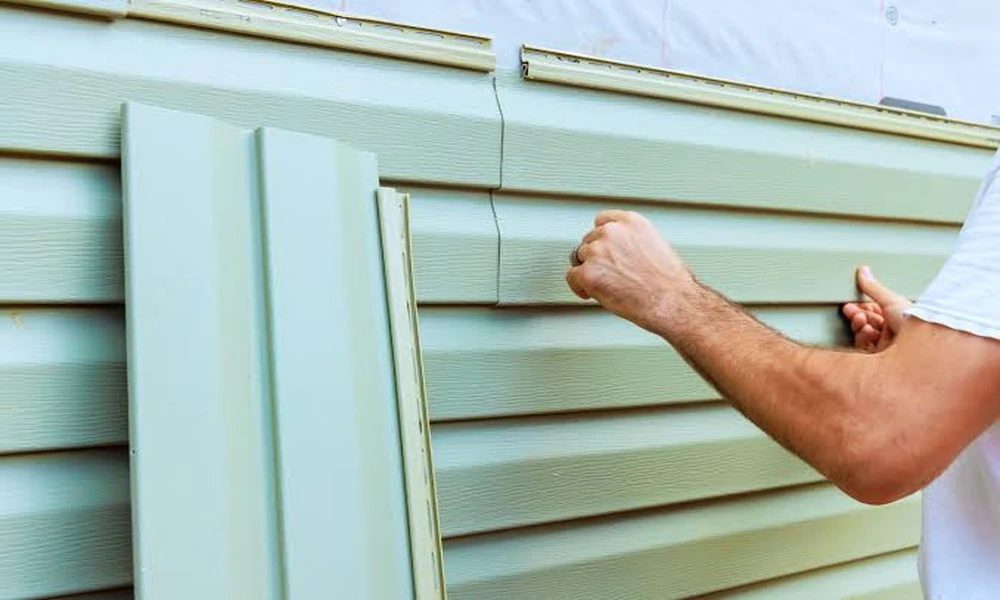
Grab a screwdriver and a warm drink, then walk the outside of your house slowly, the way you would inspect a used car. Stop at the corners, the windows and the strip right under the roofline. Plenty of homeowners who end up calling a siding contractor in Granger have already made that loop a dozen times without really looking, and the walls had been sending signals for years. Here are seven of them, in roughly the order they tend to appear.
1. The Crack You Only Notice in Winter
Vinyl siding moves more than most people realize. A panel about twelve and a half feet long can change length by half an inch or more as temperatures swing, and it turns brittle once the air gets properly cold. A hairline split near a corner or at the end of a panel is often the first visible sign that the material is aging or was fastened too tightly.
Press gently on any crack you find. If the edge flexes or crumbles, the panel has lost its elasticity and will keep splitting.
2. Waves, Ripples and Panels That Look Tired
Straight rows of siding should look straight. Buckling and rippling usually point to a handful of causes, such as nails driven flat against the panel so it cannot slide, panels stretched upward before they were fastened, or an uneven wall underneath that was never corrected. Fixing a few waves is possible, but a whole elevation that ripples was probably installed without room to move, and that problem will return.
3. Panels That Wander After a Windy Night
Gusts find the weakest point first. A panel that hangs loose at the bottom, a missing piece near the roof edge or a corner trim that has pulled away leaves the wall exposed. Wind damage is also one of the situations where insurance may step in, so photograph the damage and note the date before anything gets patched. A contractor can inspect, document what the storm did and help you through the claim.
4. Color That Has Faded or Turned Chalky
Run a hand across a sun-facing wall. If a pale powder comes off on your palm, the surface has begun to break down. Fading alone is cosmetic, but uneven color across the house suggests the finish is wearing out in patches, and that is usually a sign the material is moving toward the end of its useful life.
5. Moisture That Is Not Where You Can See It
This is the one that costs real money. Siding is a shield rather than a complete waterproofing system. Behind it, a water-resistive barrier such as house wrap or felt paper does the second job, and flashing around windows, doors, corners and roof-to-wall joints is meant to steer water outward instead of behind the panels.
When any of that is missing or poorly done, water gets in and stays. Look for these clues.
- Paint peeling or bubbling on interior walls near exterior corners
- Soft or spongy spots when you press on trim or sheathing
- Dark streaks, mildew or a musty smell along a wall
- Stains beneath window frames after heavy rain
Moisture trapped in a wall rots framing quietly, so these signs deserve attention even if the siding itself looks fine.
6. A Heating Bill That Keeps Creeping Up
Siding does not insulate on its own, yet damaged cladding and gaps around trim let air leak through the wall assembly. If rooms on one side of the house stay stubbornly cold or the furnace seems to run longer than it used to, the exterior may be part of the story. Newer windows, installed at the same time, can improve comfort and trim heating and cooling costs, which is why exterior jobs often get bundled.
7. Tiny Holes and Visitors
Small round holes, sawdust trails or nests tucked behind loose panels mean something has moved in. Insects and birds love the sheltered gap behind damaged siding. Once pests are involved, the wall behind the panels deserves a closer look, since they rarely arrive where there is nothing to eat or nest in.
Repair It or Reclad the House?
Most of the signs above can be handled by repair when they are isolated. A single cracked panel can be swapped, a loose corner can be refastened and a failed bit of caulk can be redone. The trouble starts when problems spread across several walls or come back after being fixed.
Think about replacement if you recognize two or more of these.
- Cracking or warping on more than one side of the house
- Moisture or rot found behind the siding
- Panels that are faded or chalky across the whole exterior
- Repeated repairs that keep failing in new spots
Material choice matters more in this climate than in a mild one. Vinyl has to be installed loosely and with extra clearance when temperatures are below about 40 degrees. Fiber cement behaves like concrete, so it can crack if it soaks up water and freezes. Real wood demands regular painting and scraping, while engineered wood is designed to resist cracking and splitting. Water expands by nearly ten percent as it freezes, which is why any material that holds moisture suffers in a freeze and thaw region like Michiana.
What to Ask Before Anyone Starts Pulling Panels
A siding job is only as good as the layers nobody sees afterward. Ask the crew how they handle house wrap and flashing, because the installation notes on expansion and contraction published by the siding industry stress that fasteners should be driven straight, centered in the slots and left slightly loose so each panel can slide. Ask whether they adjust clearances for cold weather, and request a written scope that names the product, the trim and the cleanup plan.
A good contractor will also point out problems they find along the way instead of quietly covering them up. That honesty is worth more than the cheapest number on a quote.
Where Jose Ramirez Fits Into This
For homeowners around Elkhart, Goshen and the wider Michiana area, the local crew led by Jose Ramirez handles roof repairs, replacements and exterior work such as siding and windows. He started with very little and learned the trade the slow way, through long hours and honest work, and that background shows in how he talks about the walls of a house. Free estimates are offered on weekdays from 9 to 5, and you can reach the team at 574-501-3533 or peakrnc@gmail.com.
Walk your own house this weekend with that screwdriver in hand. If even two of these signs sound familiar, a short inspection now will cost far less than what a wet wall costs in spring.
