

Head down the stairs of almost any split level built on the east bench in the seventies or eighties and you’ll find the same corner. There’s a furnace, a water heater beside it, a metal flue running up into the chimney, and a floor drain that has seen better days. When that heater gives out, the easy move is to put the same thing back. Sometimes that’s the right decision. It’s still worth stopping to think first, because the house, the family and the technology have all changed since the last tank went in.
Homeowners comparing water heaters in Centerville have a local option nearby in goffplumbing.com, run by a family of Utah natives out of Farmington, just up the road. The crew installs both standard and tankless units, troubleshoots your existing heater before quoting a new one, and keeps parts stocked on the truck so a swap rarely runs into a second day. Prices come in writing up front, which helps when you’re comparing three very different machines.
Before comparing models, it helps to understand what a Wasatch Front basement demands from any water heater.
Four Local Facts Every Option Has to Answer
The first is cold incoming water. In midwinter, water enters the house far colder than it does in July, so the heater has to raise its temperature by seventy degrees or more. A unit that keeps up easily in summer can fall behind in January.
The second is altitude. Centerville sits well above 4,000 feet, and the thinner air there changes how gas burns. Gas units, especially tankless models, often need a high altitude setting or a derating that the installer configures during setup.
The third is hard water. Minerals in the local supply build up in tanks and coat heat exchangers, so any choice needs a maintenance plan that accounts for scale.
The fourth is the ground itself. The Wasatch Fault runs along the base of the mountains right behind town, which is why secure seismic strapping is part of every installation here.
The Familiar Tank, Looked At Again
A standard 40 or 50 gallon gas tank is still the cheapest option to buy and the simplest to service. Many older models with a standing pilot keep heating water during a power outage, and households that lived through a long winter outage tend to appreciate that.
The number that matters most is the first hour rating, not the gallon size. That figure on the label tells you how much hot water the tank can deliver in an hour of heavy use. Two 50 gallon tanks can perform quite differently on a busy morning.
Older Davis County homes often have a hidden venting issue. When a family upgrades to a high efficiency furnace, the new furnace vents through plastic pipe out the side of the house. That leaves the water heater alone in a chimney sized for two appliances. A lone heater in an oversized flue can draft poorly and create condensation that damages masonry. In the worst cases it can spill exhaust back into the basement. A chimney liner or a power vented tank fixes the problem, and a careful installer will check for this before simply swapping the old tank out.
Endless Hot Water Comes With Fine Print
Tankless heaters free up floor space and stop heating water nobody is using, which is a real efficiency gain. Their limit is flow rate rather than volume. Every model’s flow in gallons per minute drops as the required temperature rise increases. That means a unit has to be sized for January water temperatures, not for the conditions shown in a brochure.
Most homes also need upgrades to make room for one. Gas tankless units draw a large amount of fuel at full output, so the existing gas line often has to be upsized. The unit needs new venting through a wall or the roof, plus an electrical outlet for its controls and ignition. In hard water it should be descaled every year.
Permitting for tankless units is different too. A straight tank replacement goes through the city’s standard plumbing permit. Centerville’s plumbing permit application puts tankless installs in a separate category that requires a schematic and a review instead of an over the counter approval, so plan a little extra time.
The Heat Pump Option Most People Overlook
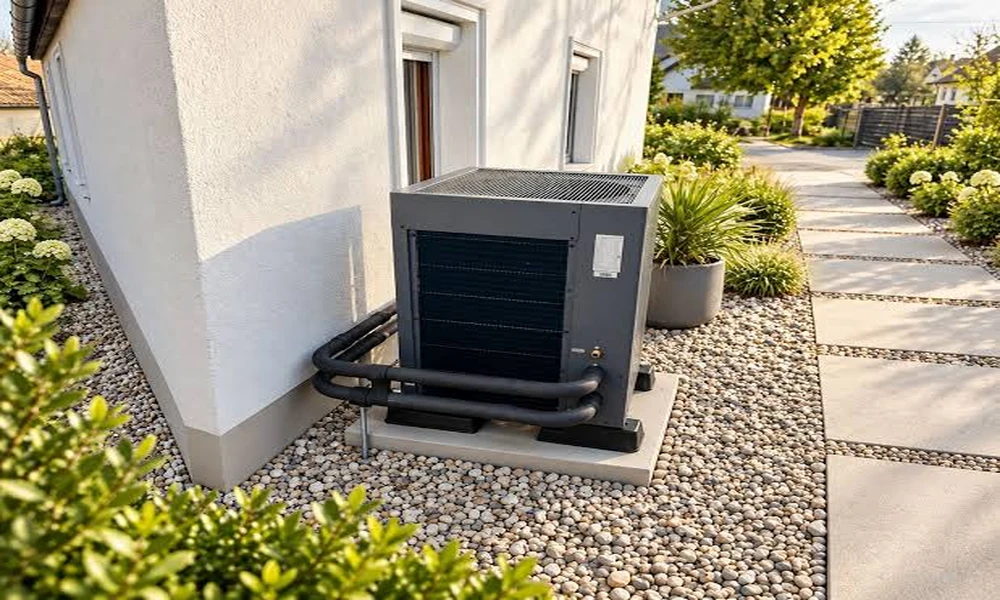
A heat pump water heater works like a refrigerator in reverse. It pulls warmth from the surrounding air and moves it into the tank, using a fraction of the electricity a standard electric tank needs. For a house that already has an electric water heater, it’s often the biggest efficiency upgrade available.
It does have conditions. The unit needs a large volume of surrounding air, typically an unfinished room or a space with a louvered door. It also needs a condensate drain, and most models require a 240 volt circuit, although newer plug in versions run on a standard outlet. Because it cools and dries the air around it, a heat pump unit acts as a free dehumidifier in summer. In winter it takes some heat from a basement that may already be cool. Most models switch to backup elements when the room gets too cold, so a basement that stays reasonably mild through winter is the best fit.
Fitting the Machine to the People Upstairs
How a household actually uses hot water usually decides the choice faster than any spec sheet does.
Empty nesters in a rambler rarely need more than a modest tank, and a heat pump model can lower their monthly bill without changing their routine. A family with teenagers running showers back to back before school will notice the difference a high first hour rating or a properly sized tankless unit makes.
Homes with a basement apartment are their own case. A tenant showering at the same time as the family upstairs can overwhelm a single small tank, so a larger unit or a separate heater for the apartment is often the answer. A deep soaking tub raises a different question. A tank has to hold enough volume to fill it with hot water, while a tankless unit will fill it slowly but without running out.
Groundwork Before the First Quote
A little preparation makes quotes easier to compare and harder to pad. Before calling anyone, go through these steps:
- Photograph the data label on your current heater, including the capacity, input rating and manufacture date.
- Note how it vents, whether through a chimney shared with the furnace, its own metal pipe, or plastic pipe through a wall.
- Measure the space, including ceiling height and the width of the doorway the new unit has to fit through.
- Count how many showers run back to back on a typical winter morning.
- Check whether there’s an outlet nearby and space in the electrical panel for a new circuit.
- Ask each contractor whether the quote includes the permit, seismic straps, an expansion tank and removal of the old unit.
That last question is where quotes tend to differ the most. An inspector will check the straps, the relief valve discharge line and the venting, so leaving any of them out only delays the job.
Thinking a Decade Ahead
A tank generally lasts ten to twelve years in local water. A tankless unit with regular descaling can last considerably longer, and a heat pump model falls somewhere in between. The right choice depends less on what’s popular and more on how long you expect to stay in the home, who will be living there, and what that corner of the basement can support. Choose with the next ten years in mind, not just the next cold shower.
